New dealers will miss out on the used EV wave unless they proactively acquire electric units from lease returns or from auctions. Just because they sold the car new does not necessarily mean that they will win the used sale as well.
Over the past 45 days, I have visited roughly 15 dealerships and the same question keeps coming up: What happens when all of these leased EVs start coming back?
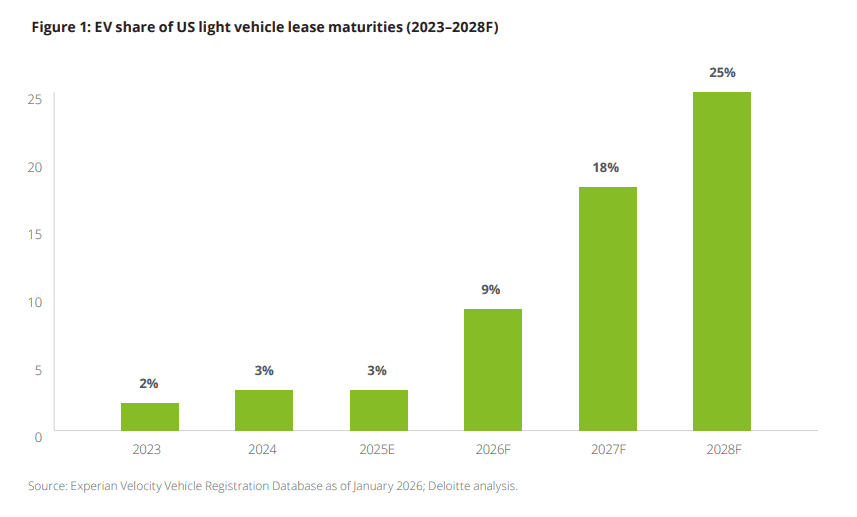
Data shows that the answer is going to define one of the biggest inventory opportunities in automotive retail over the next few years. Here is the part that feels almost ironic.
A franchise dealer worked hard to sell that EV new. They trained the team. They answered the charging questions. They handled the objections. They explained range, incentives, home charging, payment, and why the customer should feel comfortable trying something new. In many cases, getting that customer into an EV lease took more effort than selling a comparable gas car. And then, two or three years later, that exact same unit comes back.
The customer reaches the end of the lease and looks at their options. They can buy the car, lease something new, buy something else, or hand the keys back. But in most scenarios right now, the decision is basically made for them. The market value of the used EV is often meaningfully lower than the lease buyout price, so buying it does not make financial sense. Why pay more than the car is worth? The customer naturally returns the vehicle.
The dealer then faces a version of the same economic reality the customer just faced. In most cases, the issue is not philosophical. It is mathematical. If the vehicle is not worth its residual value to the consumer, it is unlikely to look attractive to the dealer at or near that same number. The store may understand the brand, know the customer, and have the service history, but it still has to underwrite the unit as inventory. That means assessing battery health, real-world range, days-to-turn risk, pricing volatility, sales team readiness, and whether the vehicle can be explained clearly enough to create buyer confidence. For many stores, the conclusion is straightforward: the car may be familiar, but the economics are not compelling enough to own it. So the dealer passes.
Whatever the specific reason, the result is the same.
The franchise dealer who worked hard to sell the EV new may completely miss the opportunity to sell that same vehicle used.
That is the hidden leak in the system.
At that point, the vehicle moves back onto the balance sheet of the OEM’s finance arm, which is the party that originally funded the lease and accepted the residual value risk. If the customer declines the buyout and the grounding dealer chooses not to acquire the unit, the captive finance company is left to solve the problem through remarketing. In practical terms, that means the vehicle is no longer a retail opportunity inside the franchise network. It becomes a wholesale asset that has to find the highest bidder elsewhere, often through auction.
And once it goes to auction, the market opens up to whoever understands the asset best.
That is where companies like Carvana and used EV specialists can step in heavily.
They are not looking at these cars as confusing science projects. They are looking at them as inventory they know how to price, explain, photograph, merchandise, and sell. That raises the real question for franchise dealers and OEMs: How do we make sure these cars do not simply leak out of the franchise network?
OEMs and dealers need to work together to make used EVs easier to appraise, explain, merchandise, and retail. Stores need confidence in battery health, range, pricing, charging education, and shopper demand. OEMs need their dealer networks to capture the second sale, not just the first one. Because if the industry does not equip franchise stores to carry used EV inventory with confidence, someone else will. That is the hidden truth.
The used EV wave will not automatically belong to the dealers who sold the cars new.
It will belong to the retailers who can understand these vehicles, price them accurately, explain them clearly, and merchandise them with confidence. That makes the lease return more than an inventory event. It is a knowledge arbitrage event.
For franchise dealers and OEMs, the implications are clear. The franchise network has the natural advantage: the customer relationship, the brand trust, the service lane, the original transaction history, and the physical retail footprint. But those advantages only matter if they are converted into a real operating strategy and process for used EVs.
If franchise dealers and OEMs do not increase collaboration, they risk surrendering the market to retailers that understand the category better. And if OEMs allow off-lease EVs to move too easily into the wholesale market, they may be helping third-party retailers build the next major used EV channel with inventory the franchise network originally created.
This is no longer just a question of residual values. It is a question of who becomes the trusted place to buy a used EV.
At Lectrium, we are working to equip franchise dealers to move both new and used EVs with more confidence. We want to collaborate with OEMs, finance arms, and dealer groups to solve this at scale: making EVs easier to understand, easier to merchandise, easier to sell, and easier for shoppers to trust.
The used EV shopper is coming. The inventory is coming. The lease returns are coming. Deloitte states a few ideas that OEMs can take to improve this process, including:
"Early and coordinated action is important for value management A fragmented lease-end strategy can amplify residual value losses and risks, driving away loyal customers. OEMs and captives should consider building an integrated lease-end process that prioritizes customer engagement and retention.
Used BEV demand should be created, not assumed Many US consumers remain cautious about range, charge time, price, battery replacement cost, and public charging access. Yet current BEV ranges, improving infrastructure, and lower maintenance costs are shifting those perceptions.
Always-on software updates can be a value lever Consumer research indicates many buyers are more likely to keep a vehicle longer if it receives regular software updates that add features, safety enhancements, or performance improvements. " - Deloitte
We at Lectrium, Inc. think these are great ideas, and are building software to make this a reality at the dealer and the OEM levels.
Get in touch and book a demo with us here: https://www.lectrium.com/book-a-demo?source=main
Previous post:


